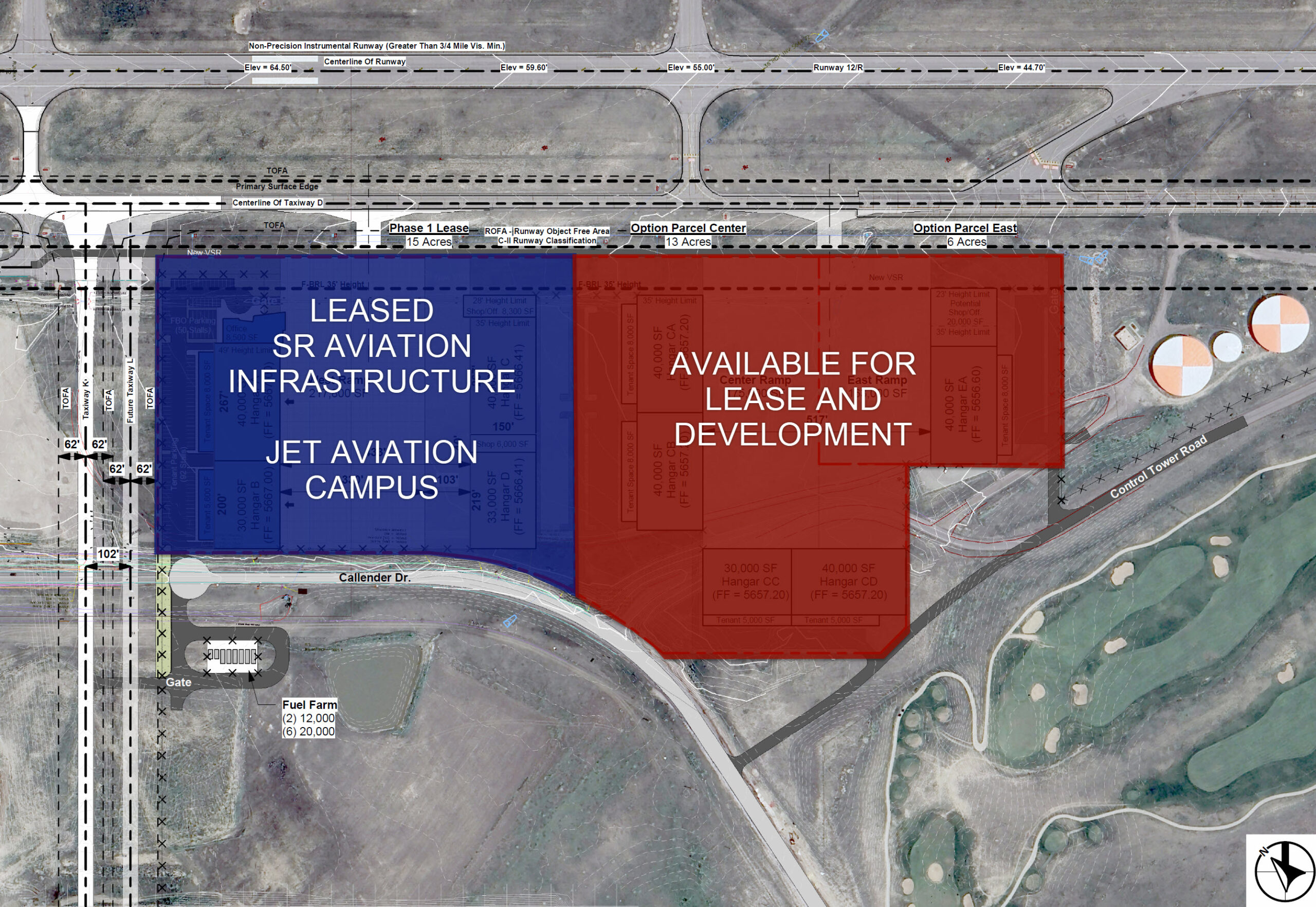
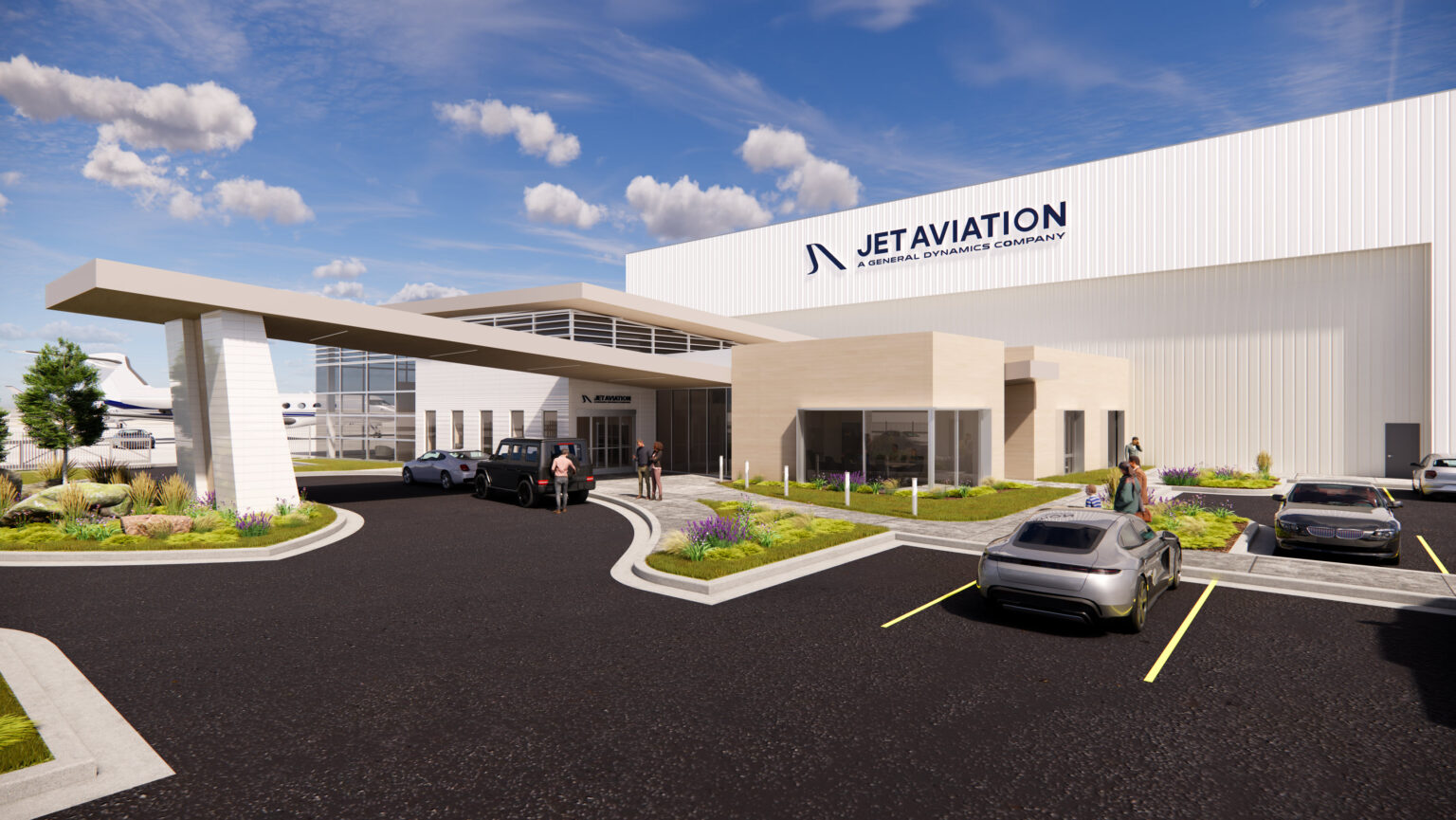
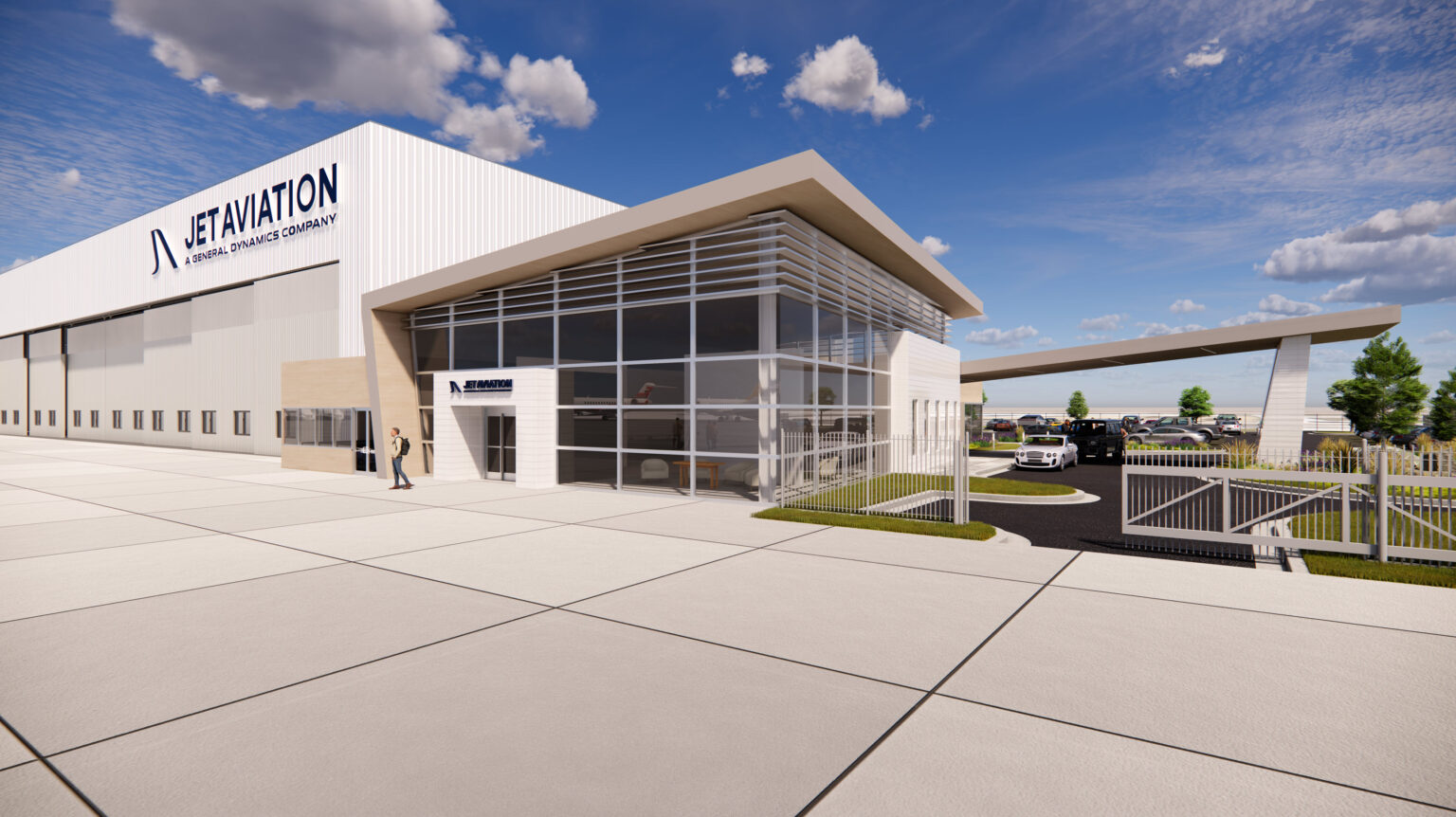
The FBO & Aviation Campus at Rocky Mountain Metropolitan Airport (BJC) is planned as a modern aviation development on the south side of the airport. The campus is designed to meet growing demand for high-quality aviation real estate in the Denver–Boulder corridor. Jet Aviation will provide FBO services within the campus, and the remaining available land provides opportunities for executive hangars and aviation-related development.
The campus is designed to meet growing demand for high-quality aviation real estate in the Denver–Boulder corridor, including FBO operations, business aviation hangars, corporate aviation users, aviation service providers, and aviation-adjacent businesses.
With direct airfield access, new ramp infrastructure, and planned development parcels, the campus is positioned as a long-term center for business aviation at BJC.
SR Aviation Infrastructure anchors the first phase of the BJC FBO & Aviation Business Campus through SRAI Rocky Mountain, a new aviation real estate development at Rocky Mountain Metropolitan Airport.
In partnership with Business Aviation Group, SRAI is leading the investment, development, and long-term ownership of the initial campus phase.
Fixed Based Operator
Jet Aviation will serve as the campus’s anchor FBO tenant and operator, leasing and operating the completed facility.
The new FBO and hangar development will bring Jet Aviation’s global service platform to BJC, supporting business aviation users throughout the Denver–Boulder corridor and Rocky Mountain region.
Rocky Mountain Metropolitan Airport
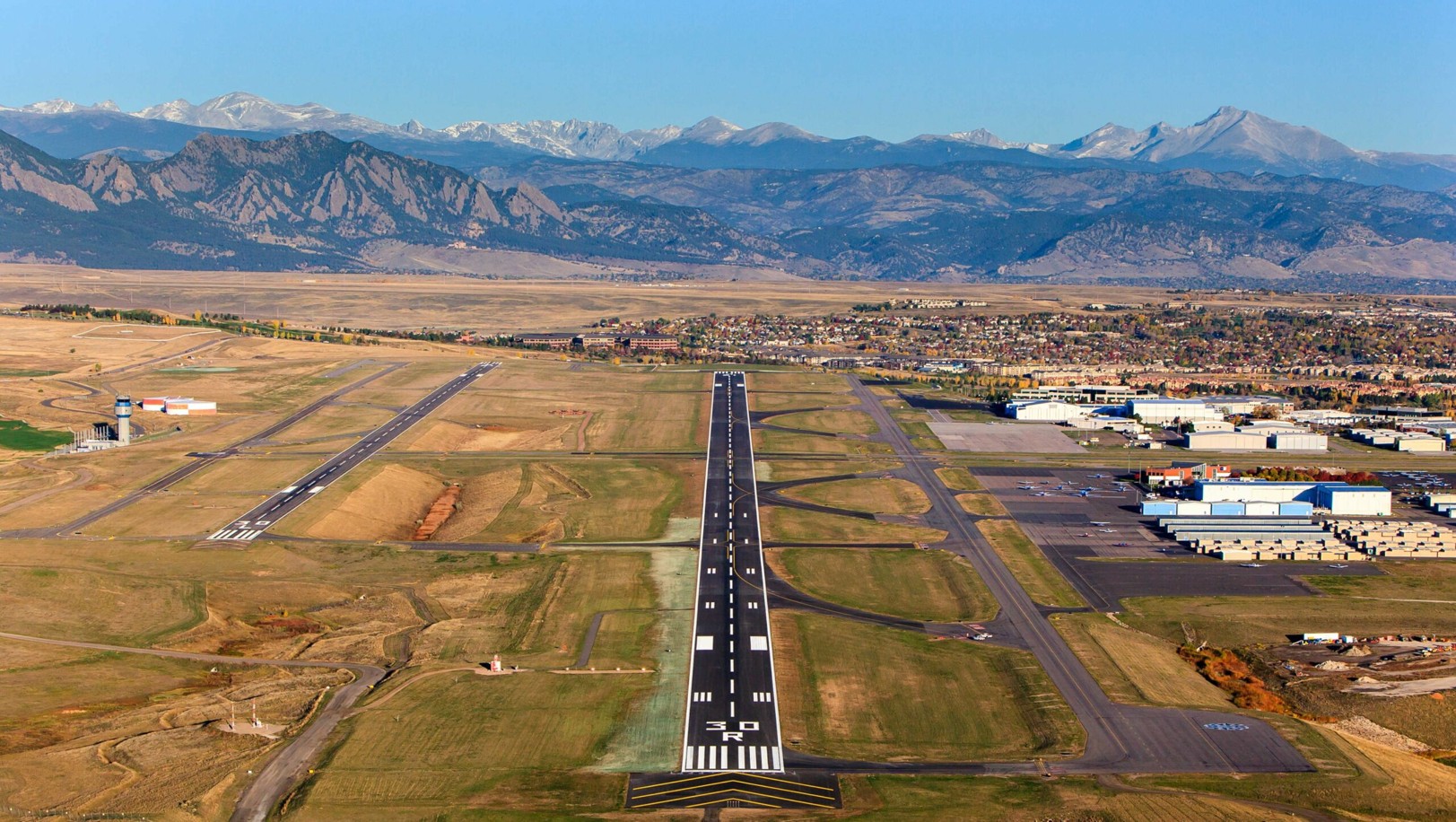
Rocky Mountain Metropolitan Airport (BJC/KBJC) is a premier aviation gateway strategically located in Broomfield, Colorado, along the US-36 corridor between Denver and Boulder. Owned and operated by Jefferson County, the airport serves as a key reliever airport for the Denver metropolitan area and supports a strong mix of corporate aviation, general aviation, flight training, aircraft services, and aviation-related business activity.
Positioned on approximately 1,700 acres, BJC is home to nearly 50 businesses and more than 400 based aircraft, making it one of the most active and established aviation hubs in Colorado. The airport offers direct access to the Denver-Boulder business corridor, the Interlocken area, downtown Denver, Boulder, and the Rocky Mountain foothills, creating a highly strategic location for aviation users and airport-oriented development.
BJC operates within controlled Class D airspace and is supported by an air traffic control tower, U.S. Customs user-fee services, on-airport fire/rescue resources, dedicated snow-removal operations, and three paved runways, including a 9,000-foot primary runway with ILS capability. These airfield assets make Rocky Mountain Metropolitan Airport a strong platform for corporate flight operations, aviation businesses, and long-term hangar demand.
Air Traffic Control Tower / Controlled Class D Airspace
24/7 operational capability and dedicated snow-removal program
On-airport fire/rescue support, including ARFF resources